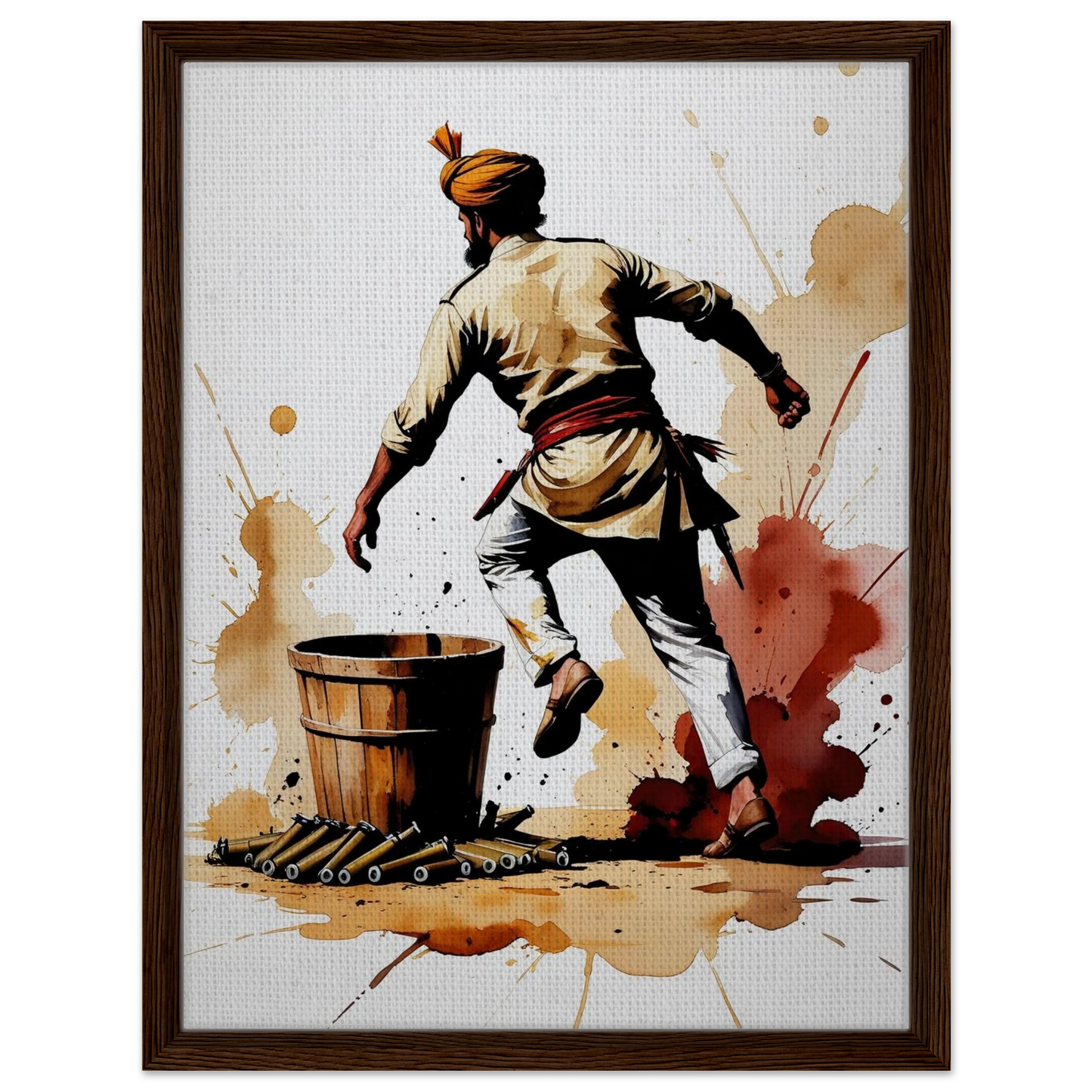
Indian history wall art print of a sepoy beside a chest of rifle cartridges, the small object that lit the 1857 uprising. Painted in soft watercolour with fine ink detail and no facial features, the soldier and his surroundings dissolving into white space at the edges. A restrained, symbolic piece for a study, office, library or hallway.
In 1857 the new Enfield rifle required soldiers to bite the cartridge before loading. The grease, rumour said correctly, was made from pig and cow fat, offending Hindu and Muslim soldiers at once. The Company dismissed the concern. The army mutinied. The cartridge was the spark; decades of land seizures, annexations and contempt were the fuel.
A thoughtful gift for a historian or anyone with Indian or South Asian heritage. Part of the Riwayah Studio Azadi collection: 1857 rebellion poster, sepoy wall art, British Raj history print, colonial India art, Indian heritage wall decor.
Country of origin: designed in the United Kingdom and printed to order in your own region, so US orders are printed and shipped within the US with no customs charges or import duty. This is an original paper art print.
Printed on premium 200 gsm matte paper with a smooth, uncoated finish that holds deep colour without glare. The paper is FSC certified and archival quality, so the artwork will not yellow over time.
Poster only: the print on its own, rolled and shipped in a protective tube, ready for your own frame or hanger. The most affordable option if you already have framing in mind.
Poster with wooden hanger: a black pine hanger with a matching leather cord. Magnetic strips grip the top and bottom of the print without damaging it, so fitting takes seconds and the print can be swapped or framed later. A good choice for renters or anyone who likes to restyle.
Framed print: a slim black aluminium frame, around 1 cm wide, with a shatterproof acrylic front and hanging kit included. The print and frame arrive together in one box, with simple fitting by hand in a couple of minutes.
Every piece is an original Riwayah Studio design, created in the United Kingdom and printed to order at our production partner's nearest facility. Orders placed in the US are printed in the US, and UK and EU orders are printed in Europe. Free delivery is included.