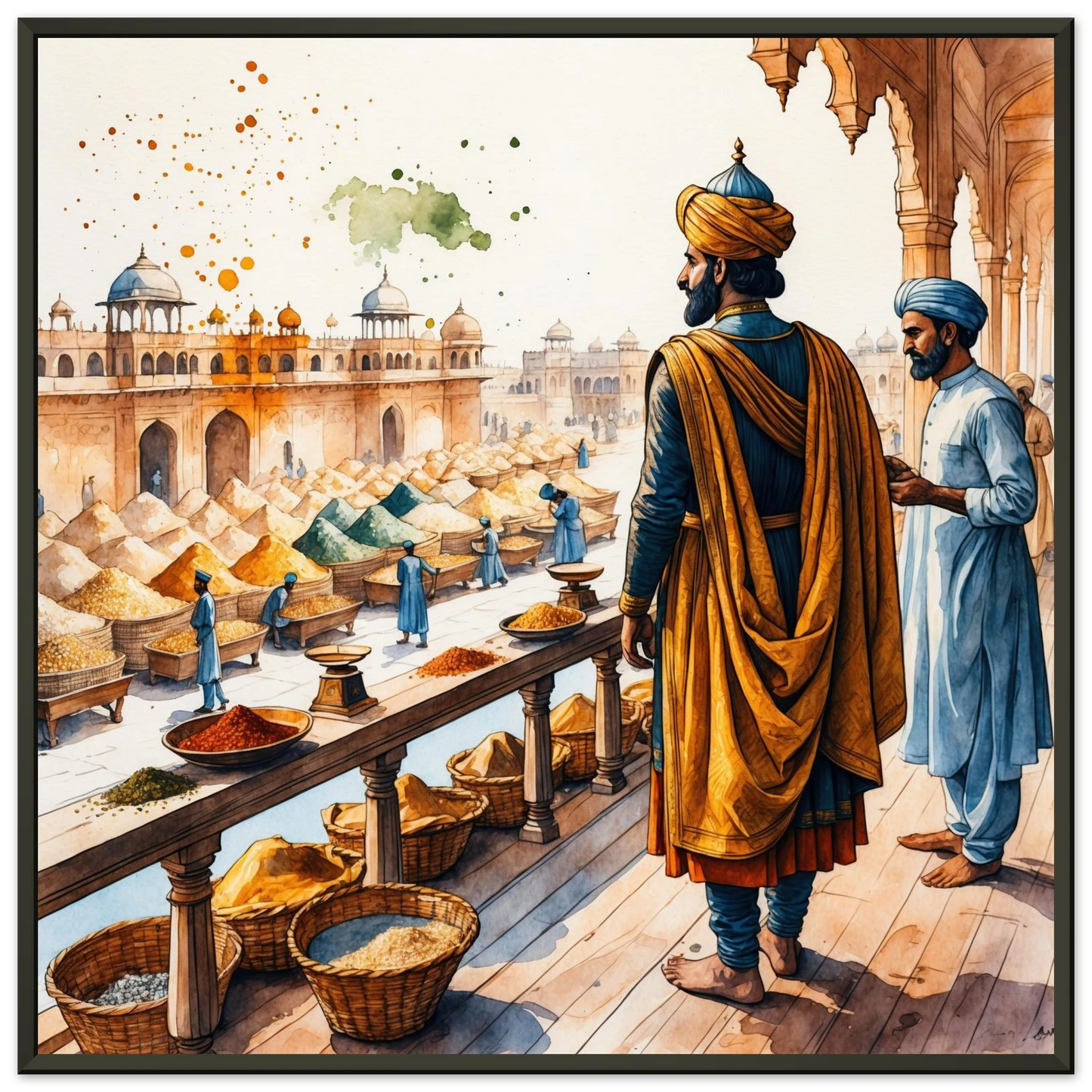
This artwork depicts a regulated marketplace from the reign of Sultan Alauddin Khilji. Merchants, officials, and citizens in a structured trading environment that reflected one of the most ambitious economic experiments in medieval history.
Alauddin Khilji, Sultan of Delhi from 1296 to 1316, fixed the prices of grain, textiles, livestock, and essential goods across the capital. He appointed market inspectors, established grain reserves, and regulated wages. The chronicler Ziauddin Barani records that prices remained stable for years, that shortages were averted during difficult periods, and that the system functioned with a precision that astonished observers.
It was not popular with merchants. It was enormously popular with everyone else. He was running a welfare state seven hundred years before the term was invented.
Every artwork in the Riwayah collection is available in four premium display formats, crafted to suit every home and interior style. Our canvas prints offer a rich, textured finish that brings depth and character to each piece, stretched on FSC-certified wooden bars for a refined gallery feel. For a minimalist and versatile look, our magnetic hangers use durable pine wood to hold your print securely without marking it, making it easy to change artwork whenever you like. Those seeking a classic, museum-style presentation can choose our premium wooden frames, crafted from responsibly sourced oak or ash with visible natural grain and protected with shatterproof plexiglass. And for a sleek, contemporary finish, our aluminium frames pair clean black metal with heavyweight matte paper for a polished, modern aesthetic. All prints use FSC-certified paper and high-quality inks, arrive ready to hang or assemble, and are produced on demand in the UK to reduce waste and ensure the highest standard of craftsmanship.