Skip to product information
1 of 30

Babur’s Gardens

Babur’s Gardens

Regular price £69.99 GBP
Regular price Sale price £69.99 GBP
Sale Sold out
Taxes included.

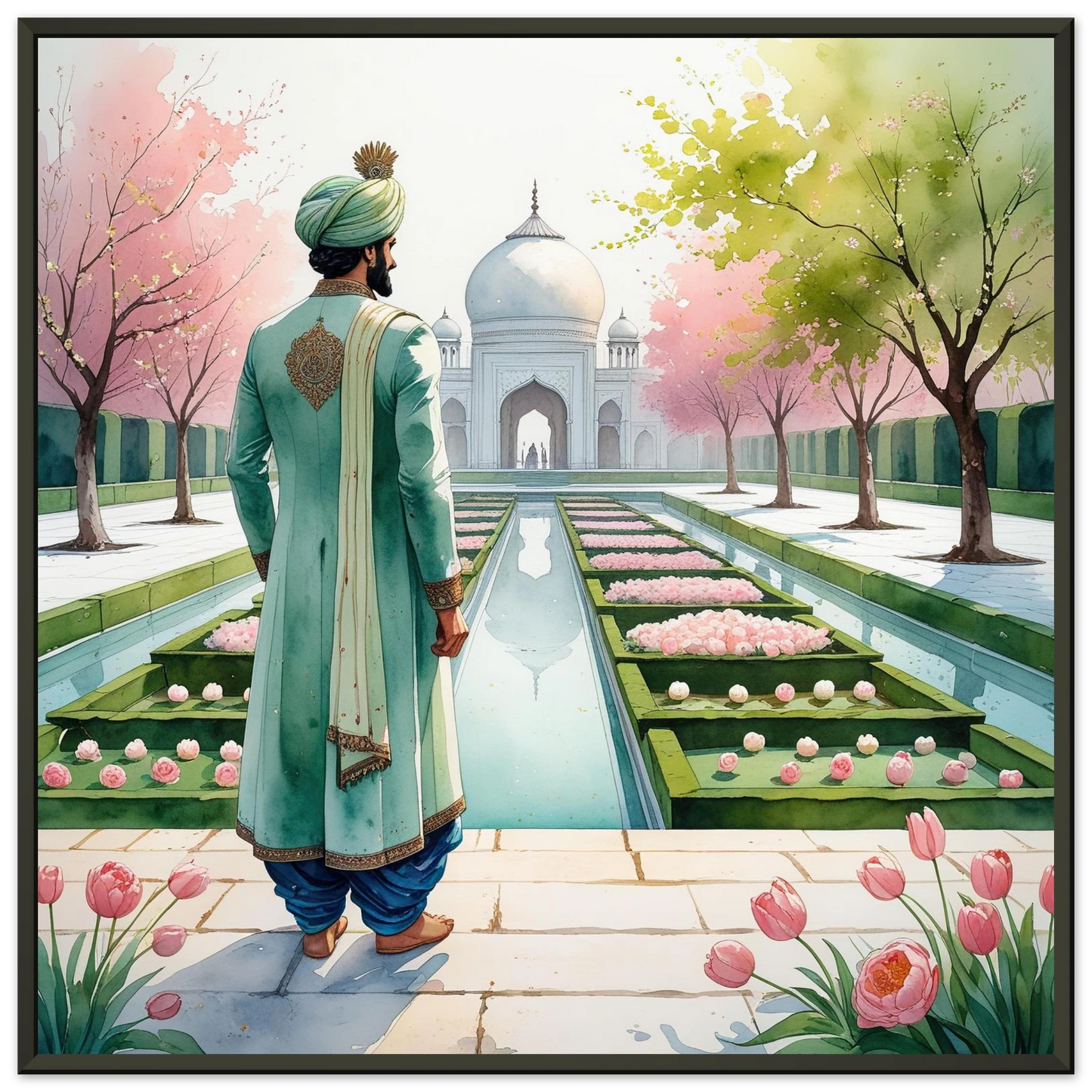
This artwork presents a cultivated garden scene inspired by the vision of Babur, founder of the Mughal Empire, whose love of horticulture shaped the landscapes of the regions he ruled. The composition reflects the ordered geometry, flowing water and symmetry characteristic of the gardens he established. It is not a literal reconstruction of any one garden, but it evokes the ideals Babur carried with him from Central Asia, where enclosed orchards, terraced beds and water channels expressed harmony between human design and the natural world. The presence of pavilions, pathways and productive trees in the artwork mirrors the style of gardens he described with care in his memoirs.

Babur, born in 1483 in the Fergana Valley, was a conqueror, poet and cultivated observer of nature. His memoir, the Baburnama, contains some of the earliest detailed descriptions of South Asian flora and landscapes from a foreign ruler. Finding the plains of northern India unfamiliar to the settings of his youth, he immediately began redesigning spaces according to the Central Asian chahar bagh model. This four part garden layout, divided by water channels or paths, symbolised order, paradise and the balance between cultivation and wilderness. Babur introduced terraced gardens in Kabul and Agra, planted fruit trees such as melons, grapes and plums, imported seeds and saplings and documented soil quality, climate patterns and plant behaviour with scientific curiosity. His gardens in Agra and Kabul served as early prototypes for the refined Mughal landscape tradition that later reached its perfection under emperors like Akbar, Jahangir and Shah Jahan.

Gardens under Babur were more than aesthetic spaces. They were settings for gatherings, reflections, political discussions and poetry. They demonstrated the Mughal vision of rulership that combined military strength with cultural refinement. The spread of the chahar bagh across the subcontinent marked a significant shift in landscape design, blending Timurid, Persian and local influences to create environments that encouraged rest, contemplation and social ritual. Babur’s horticultural contributions became foundational to Mughal identity and continued to shape the subcontinent long after his lifetime. Many historical gardens in India and Afghanistan still preserve echoes of his original principles.

Displayed in a modern interior, this artwork becomes a reminder of the civilisational role of gardens and the ways in which rulers expressed their values through the cultivation of living spaces. It invites the viewer to consider how Babur’s vision of beauty, order and natural abundance helped define an entire dynasty and left a mark that can still be felt in Mughal architecture, landscape design and cultural memory.

Every artwork in the Riwayah collection is available in four premium display formats, crafted to suit every home and interior style. Our canvas prints offer a rich, textured finish that brings depth and character to each piece, stretched on FSC-certified wooden bars for a refined gallery feel. For a minimalist and versatile look, our magnetic hangers use durable pine wood to hold your print securely without marking it, making it easy to change artwork whenever you like. Those seeking a classic, museum-style presentation can choose our premium wooden frames, crafted from responsibly sourced oak or ash with visible natural grain and protected with shatterproof plexiglass. And for a sleek, contemporary finish, our aluminium frames pair clean black metal with heavyweight matte paper for a polished, modern aesthetic. All prints use FSC-certified paper and high-quality inks, arrive ready to hang or assemble, and are produced on demand in the UK to reduce waste and ensure the highest standard of craftsmanship.

View full details