Skip to product information
1 of 33

The Return of Dhuljanah - Karbala, 680 CE

The Return of Dhuljanah - Karbala, 680 CE

Regular price £64.99 GBP
Regular price Sale price £64.99 GBP
Sale Sold out
Taxes included. Shipping calculated at checkout.

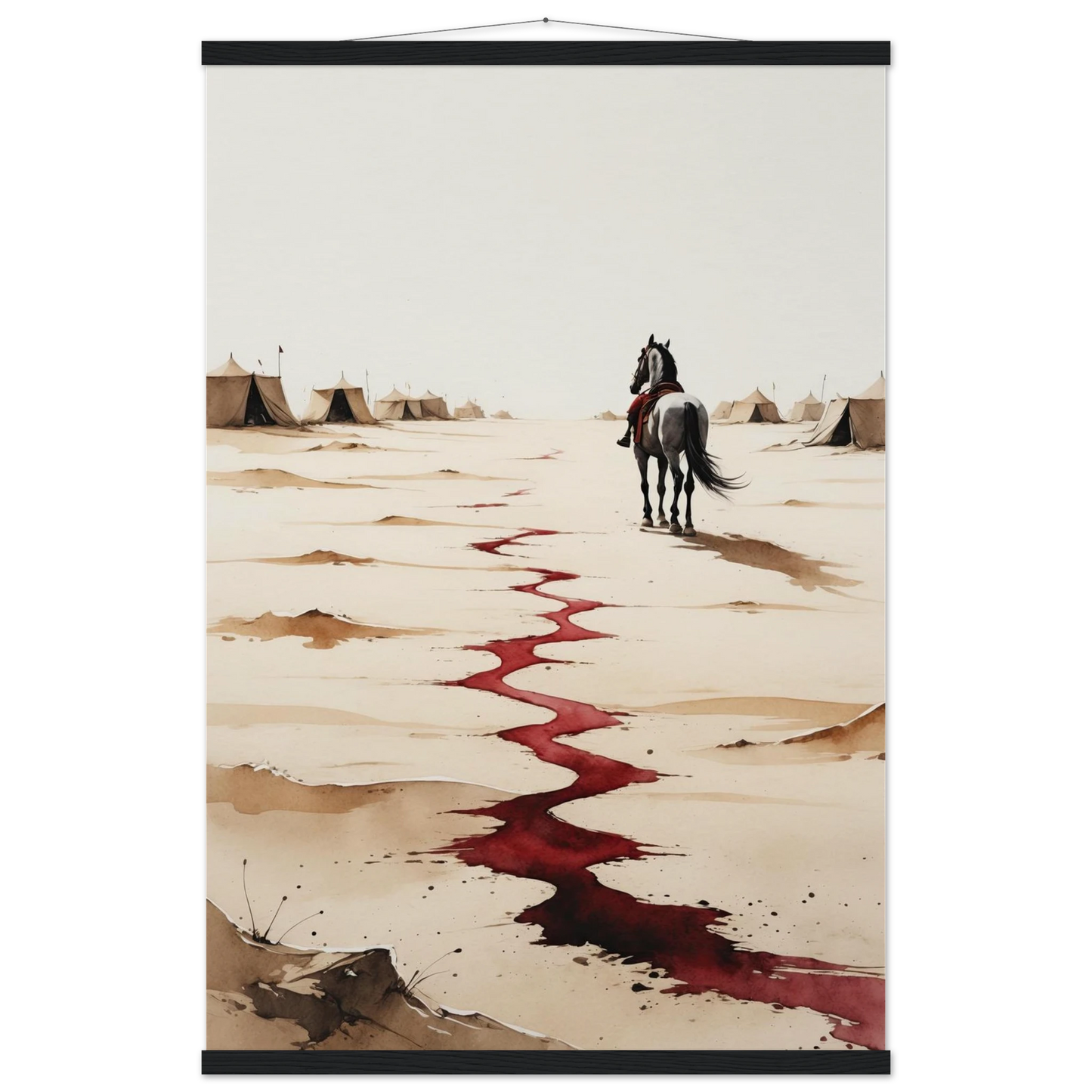
This artwork captures a haunting moment from the tragedy of Karbala. A lone horse returns across the silent desert toward the tents of the Prophet’s family, its saddle empty. The horse is Dhuljanah, the loyal mount of Imam Husayn ibn Ali, the grandson of the Prophet Muhammad ﷺ. In Islamic historical memory, the return of Dhuljanah without its rider became one of the most powerful and heartbreaking symbols of the events that unfolded on the plains of Karbala in 680 CE.

Imam Husayn stood against the rule of the Umayyad caliph Yazid ibn Mu‘awiyah, refusing to pledge allegiance to a leadership he believed represented injustice and corruption within the Muslim community. Despite knowing that his small group of companions and family members would face overwhelming opposition, Husayn chose principle over survival. His stand was not a rebellion for power but a moral refusal to legitimise what he believed to be tyranny.

The confrontation reached its tragic conclusion on the plains of Karbala in present-day Iraq, where Husayn and his companions were surrounded by a much larger army. They were cut off from water for days beneath the desert sun. One by one, Husayn’s companions and family members were killed. Eventually Husayn himself was martyred, leaving behind one of the most profound moral narratives in Islamic history.

According to historical accounts and devotional tradition, after Husayn was killed his horse Dhuljanah returned to the encampment where the women and children of the Prophet’s family were waiting. The sight of the riderless horse signalled that Husayn had fallen. In many retellings of Karbala, Dhuljanah is remembered not simply as an animal but as a witness to the final stand of a man who refused to compromise his principles.

The scene depicted in this artwork focuses on that symbolic moment of return. The empty saddle speaks louder than battle scenes ever could. It represents loss, loyalty, and the heavy silence that follows sacrifice.

Karbala has resonated across centuries as a universal symbol of moral courage. The stand of Imam Husayn is often remembered through the idea that justice must be upheld even when victory appears impossible. For many Muslims, Husayn’s sacrifice represents the refusal to remain silent in the face of oppression.

The story continues to carry profound relevance today. Throughout history, communities have drawn lessons from Karbala about responsibility, courage, and the consequences of abandoning moral duty. One of the enduring reflections on the tragedy concerns the people of Kufa, who had promised support to Husayn but ultimately failed to stand beside him when it mattered most. Their hesitation has become a lasting warning about the dangers of silence and inaction in moments of injustice.

Displaying this artwork honours one of the most powerful moral episodes in Islamic history. It invites reflection on loyalty, sacrifice, and the timeless question that Karbala continues to ask every generation: when confronted with injustice, will people stand beside the truth, or watch from a distance as others carry the burden alone.

Every artwork in this collection is available in four thoughtfully selected display formats, designed to complement a wide range of interiors while maintaining a consistent standard of quality and finish.

Our framed canvas prints offer a subtle, tactile texture that adds depth and presence to each piece, professionally stretched over FSC certified wooden bars for a clean, gallery-ready presentation. For a lighter and more flexible option, our museum-quality paper posters can be paired with magnetic wooden hangers crafted from smooth pine, allowing the artwork to be displayed or changed with ease while remaining securely held.

For a more traditional presentation, our premium wooden frames are made from responsibly sourced oak or ash, chosen for their natural grain and durability, and finished with shatterproof plexiglass for long-term protection. Those seeking a contemporary look can opt for our aluminium frames, combining slim black metal with heavyweight matte paper for a crisp, understated finish.

All prints are produced using high-quality, archival-grade inks on FSC certified papers. Each piece is made individually to order, helping minimise unnecessary waste while ensuring careful attention to quality and consistency. Your artwork arrives ready to hang or assemble, crafted to be enjoyed for years to come.


dont say his name without saying imam hussain ra

Here is the corrected and improved version, keeping the same depth but ensuring Imam Husayn (RA) is always referenced properly and respectfully.


The Return of Dhuljanah: Karbala, 680 CE

This artwork captures one of the most haunting moments from the tragedy of Karbala. A lone horse returns across the silent desert toward the tents of the Prophet’s family, its saddle empty. The horse is Dhuljanah, the loyal mount of Imam Husayn (RA), the beloved grandson of the Prophet Muhammad ﷺ. In Islamic historical memory, the return of Dhuljanah without its rider became one of the most powerful and heartbreaking symbols of what unfolded on the plains of Karbala in 680 CE.

Imam Husayn (RA) stood against the rule of the Umayyad caliph Yazid ibn Mu‘awiyah, refusing to pledge allegiance to a leadership he believed represented injustice and corruption within the Muslim community. Despite knowing that his small group of companions and family members would face overwhelming opposition, Imam Husayn (RA) chose principle over survival. His stand was not a rebellion for power but a moral refusal to legitimise what he believed to be tyranny.

The confrontation reached its tragic conclusion on the plains of Karbala in present-day Iraq, where Imam Husayn (RA) and his companions were surrounded by a much larger army. They were cut off from water for days beneath the desert sun. One by one, Imam Husayn’s (RA) companions and family members were killed. Eventually Imam Husayn (RA) himself was martyred, leaving behind one of the most profound moral narratives in Islamic history.

According to historical accounts and devotional tradition, after Imam Husayn (RA) was martyred his horse Dhuljanah returned to the encampment where the women and children of the Prophet’s family were waiting. The sight of the riderless horse signalled the devastating news that Imam Husayn (RA) had fallen. In many retellings of Karbala, Dhuljanah is remembered not simply as an animal but as a silent witness to the final stand of a man who refused to compromise his principles.

The scene depicted in this artwork focuses on that symbolic moment of return. The empty saddle speaks louder than battle scenes ever could. It represents loss, loyalty, and the heavy silence that follows sacrifice.

Karbala has resonated across centuries as a universal symbol of moral courage. The stand of Imam Husayn (RA) is remembered through the belief that justice must be upheld even when victory appears impossible. For many Muslims, his sacrifice represents the refusal to remain silent in the face of oppression.

The story continues to carry profound relevance today. Throughout history, communities have drawn lessons from Karbala about responsibility, courage, and the consequences of abandoning moral duty. One of the enduring reflections on the tragedy concerns the people of Kufa, who had promised support to Imam Husayn (RA) but ultimately failed to stand beside him when it mattered most. Their hesitation has become a lasting warning about the dangers of silence and inaction in moments of injustice.

Displaying this artwork honours one of the most powerful moral episodes in Islamic history. It invites reflection on loyalty, sacrifice, and the timeless question that Karbala continues to ask every generation: when confronted with injustice, will people stand beside the truth, or watch from a distance as others carry the burden alone.

Every artwork in this collection is available in four thoughtfully selected display formats, designed to complement a wide range of interiors while maintaining a consistent standard of quality and finish.

Our framed canvas prints offer a subtle, tactile texture that adds depth and presence to each piece, professionally stretched over FSC certified wooden bars for a clean, gallery-ready presentation. For a lighter and more flexible option, our museum-quality paper posters can be paired with magnetic wooden hangers crafted from smooth pine, allowing the artwork to be displayed or changed with ease while remaining securely held.

For a more traditional presentation, our premium wooden frames are made from responsibly sourced oak or ash, chosen for their natural grain and durability, and finished with shatterproof plexiglass for long-term protection. Those seeking a contemporary look can opt for our aluminium frames, combining slim black metal with heavyweight matte paper for a crisp, understated finish.

All prints are produced using high-quality, archival-grade inks on FSC certified papers. Each piece is made individually to order, helping minimise unnecessary waste while ensuring careful attention to quality and consistency. Your artwork arrives ready to hang or assemble, crafted to be enjoyed for years to come.

View full details