Skip to product information
1 of 33

Jahangir’s Chain of Justice

Jahangir’s Chain of Justice

Regular price £64.99 GBP
Regular price Sale price £64.99 GBP
Sale Sold out
Taxes included.

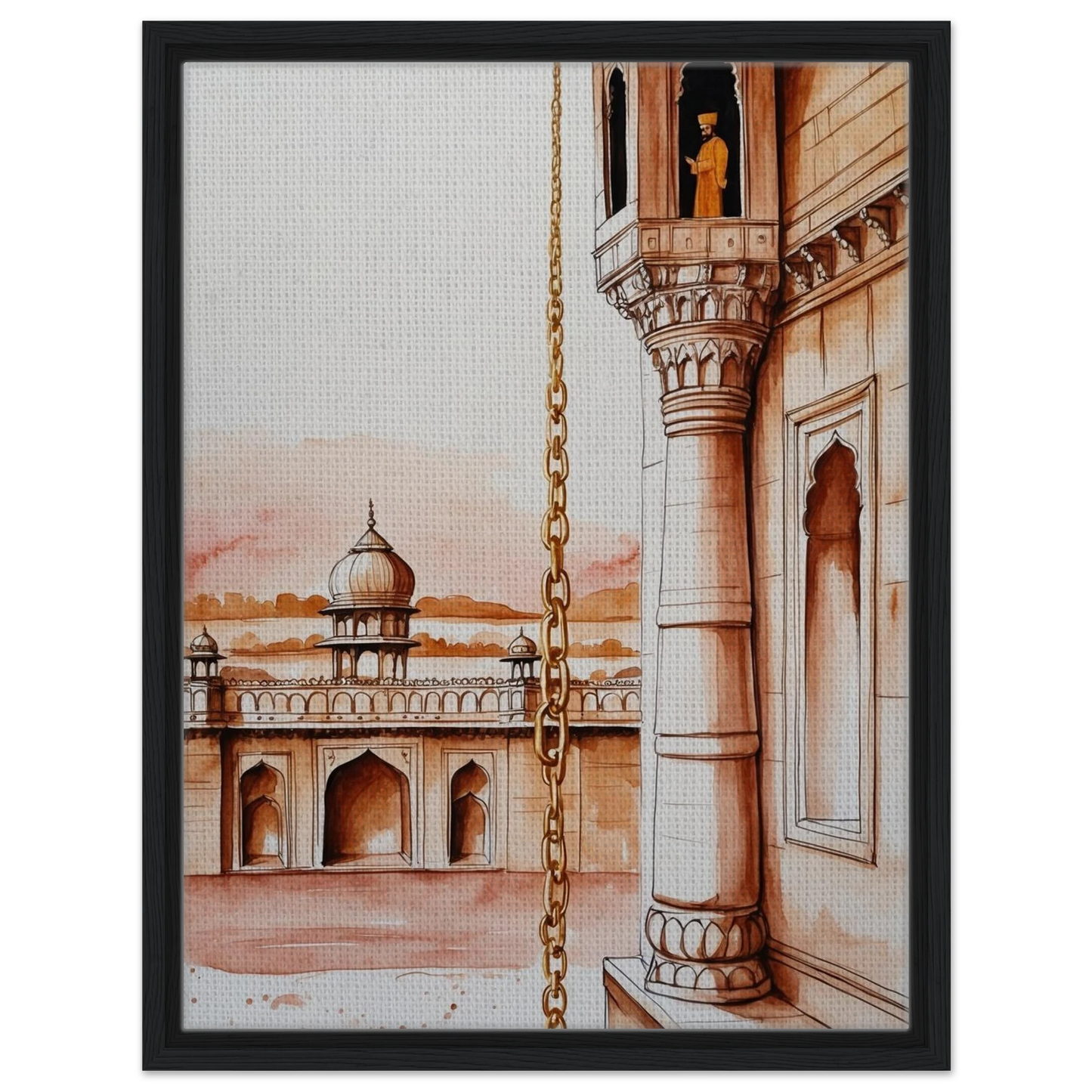
This artwork reflects the world of legal fairness established under Emperor Jahangir, who ordered a great golden chain to be hung outside his palace so that any subject, regardless of status, could appeal directly to him. The scene captures the measured dignity of Mughal justice, with the emperor shown from behind in a moment of quiet attentiveness, symbolising a ruler who placed accountability at the heart of governance. Although the artwork is not a literal reproduction of a documented event, it evokes a practice firmly rooted in historical record and widely praised by contemporaries within and beyond the Mughal Empire.

Historically, Jahangir, who ruled from 1605 to 1627, hung a chain of pure gold between the palace and the riverfront at Agra. It contained nearly sixty bells and stretched for many metres, fixed with massive golden rings. Anyone who felt wronged by officials or local courts could pull the chain and summon the emperor’s attention. Jahangir recorded in his memoirs that he introduced the chain so that “justice might be available to all”, describing it as a safeguard against oppression, corruption and negligence. In an era when rulers across much of the world were distant from ordinary subjects, Jahangir’s chain stood as a visible declaration that the ruler was not above accountability but bound to it.

The chain also reflected a broader Mughal legal culture that blended Islamic principles of justice with administrative reforms. Jahangir’s court became known for regulating punishments, reviewing convictions, monitoring judges and ensuring that complaints reached the highest levels. European envoys who visited India at the time wrote admiringly of the chain, remarking that the idea of a monarch making himself accessible to the poor was rare in their own countries. While the symbolic power of the chain is well known, its deeper significance lay in the message it sent to officials throughout the empire. They governed under the knowledge that their actions could be scrutinised directly by the emperor.

Displayed in a modern home, this artwork invites reflection on leadership and accountability. It speaks to the enduring belief that justice requires proximity, humility and openness from those who hold authority. In a world where institutions often feel remote, the Chain of Justice remains a reminder that fairness is strongest when people can be heard without fear or barriers. Jahangir’s gesture endures as one of the most striking examples of a ruler placing himself within reach of the very subjects he governed.

Every artwork in this collection is available in four thoughtfully selected display formats, designed to complement a wide range of interiors while maintaining a consistent standard of quality and finish.

Our framed canvas prints offer a subtle, tactile texture that adds depth and presence to each piece, professionally stretched over FSC certified wooden bars for a clean, gallery-ready presentation. For a lighter and more flexible option, our museum-quality paper posters can be paired with magnetic wooden hangers crafted from smooth pine, allowing the artwork to be displayed or changed with ease while remaining securely held.

For a more traditional presentation, our premium wooden frames are made from responsibly sourced oak or ash, chosen for their natural grain and durability, and finished with shatterproof plexiglass for long-term protection. Those seeking a contemporary look can opt for our aluminium frames, combining slim black metal with heavyweight matte paper for a crisp, understated finish.

All prints are produced using high-quality, archival-grade inks on FSC certified papers. Each piece is made individually to order, helping minimise unnecessary waste while ensuring careful attention to quality and consistency. Your artwork arrives ready to hang or assemble, crafted to be enjoyed for years to come.

View full details